
Face Procedures
We believe every face is beautiful. Our goal isn’t to “change” the way you look, but rather, to accentuate the radiance and beauty that is unique to you. As we age, our face undergoes changes due to life, weather, stress, and natural aging. At UPS, we have a number of surgical and non-surgical options to help you bring your best face forward.
VIEW PROCEDURES BY DOCTOR


Browlift
Tap To Reveal


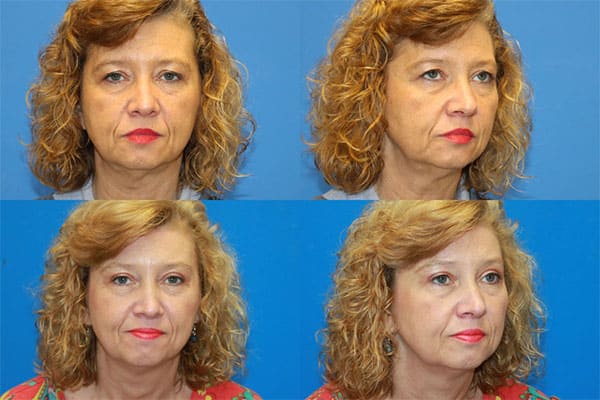
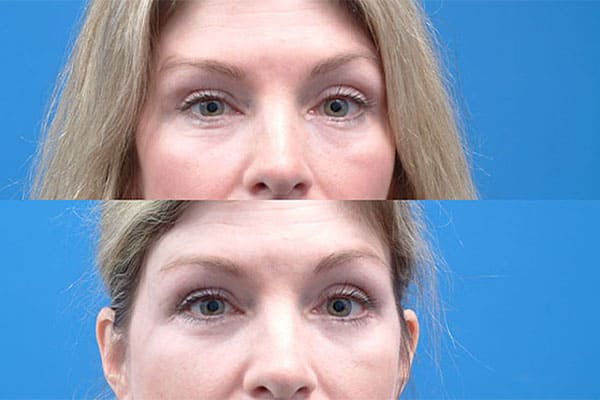
Eyes
Tap To Reveal

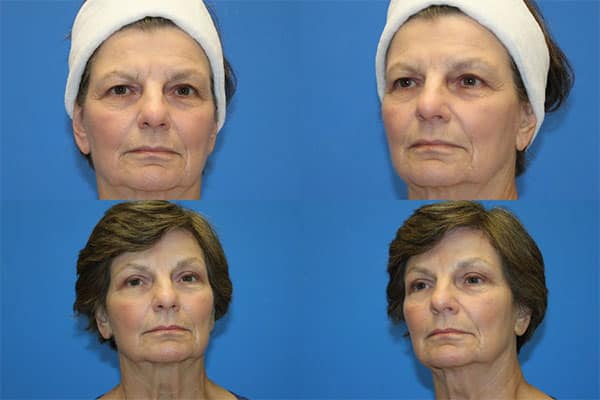
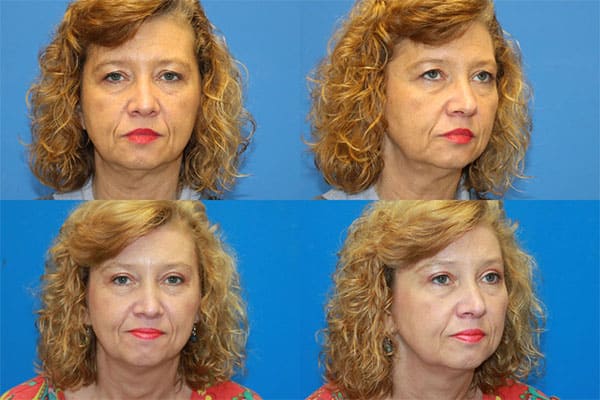
Facelift
Tap To Reveal

Otoplasty
Tap To Reveal


Rhinoplasty
Tap To Reveal


Blepharoplasty
Tap To Reveal


Brow Lift
Tap To Reveal


Facelift
Tap To Reveal




Otoplasty
Tap To Reveal

Rhinoplasty
Tap To Reveal



Rhinoplasty
Tap To Reveal



Facelift
Tap To Reveal

Face Procedures Explained
Facelift
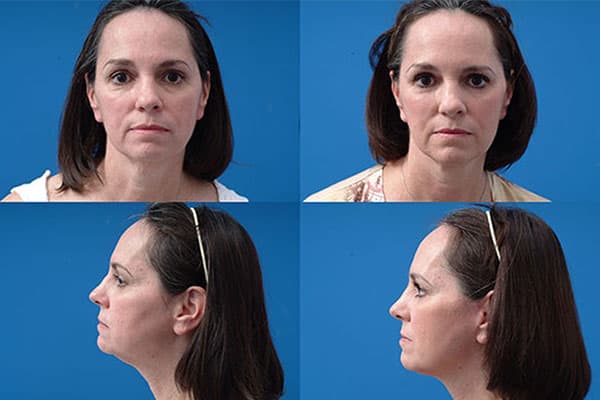
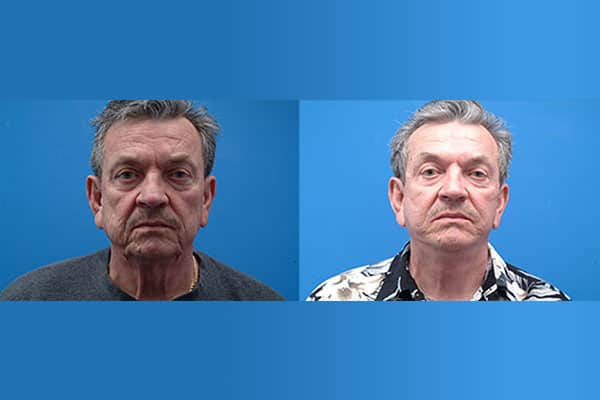
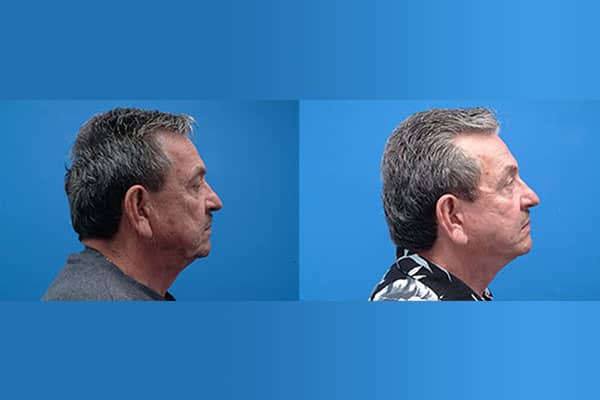
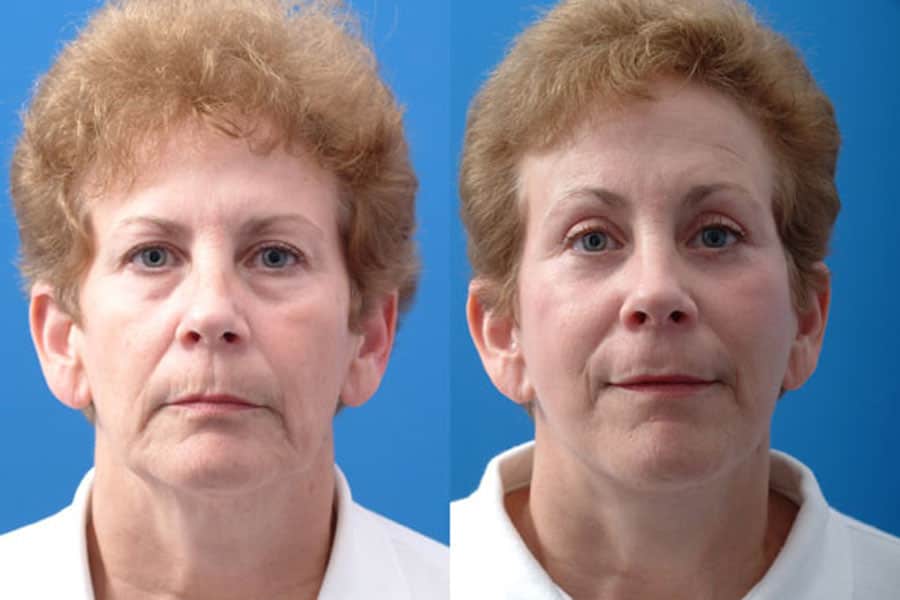
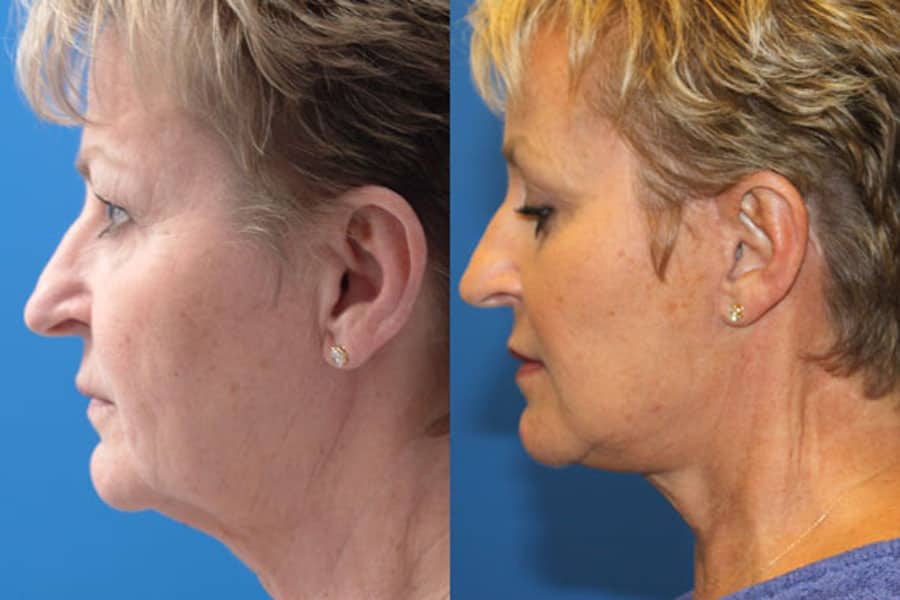
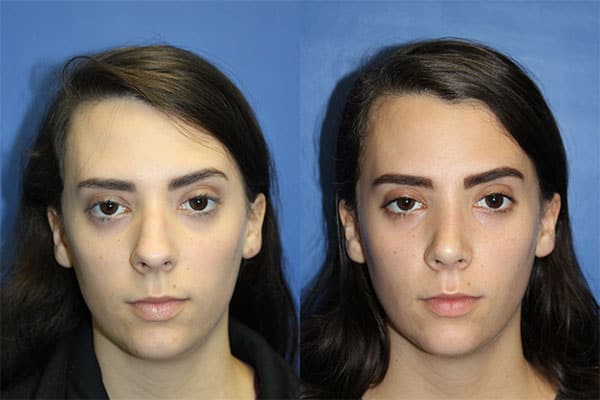
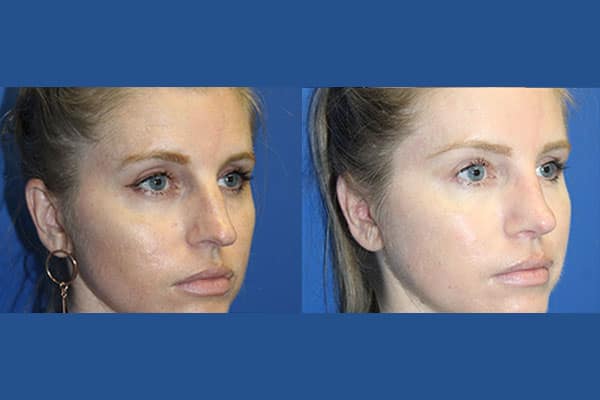
Characteristic changes are observed in the face with increasing age. Wrinkles and skin laxity occur in the forehead, around the eyes, and in the cheek and neck. At the same time there is sagging of the deeper structures of the face including the cheek fat pad and the neck muscles. The changes that occur in the forehead and eye region, as well as the procedures to correct them, are reviewed in those respective areas of our web site. In the mid face the most prominent changes include: wrinkled skin, drooping cheeks, deepening of the crease adjacent to the mouth, and the development of jowls. In the neck there is progressive softening of the jaw line and the development of loose skin and muscular bands beneath the chin. These changes are best corrected with a facelift.
During a facelift the deeper structures, such as the cheek fat pad and neck muscles, are re-suspended under significant tension to obtain a long lasting correction. The excess skin is then removed and the remaining skin is gently re-draped to achieve a more natural appearance. This helps avoid the “wind swept” appearance and distortion of the hairline that was common with earlier facelifting techniques.
The incisions are carefully concealed within the hair and around the ear. With this operation it is possible to achieve prominent, smooth cheeks with a clean jaw line and a tight neck. This procedure is commonly performed in conjunction with a brow lift and blepharoplasty (eyelid surgery) to create a harmonious rejuvenation of the upper and lower face. Individuals with severe neck laxity or an under projecting chin can benefit from the simultaneous placement of a chin implant.
Patients who are in good health can undergo this type of surgery in our AAAASF certified surgery center and be allowed home that night. You will be seen the day following your surgery for a quick check up and again at five to seven days for removal of stitches. Two weeks of recovery is generally necessary before returning to work and four to six weeks before engaging in strenuous activity.
To obtain the best results from your facial surgery Drs. Lovett, Blakemore and Shultz strongly recommend that you begin a skin care program. The skin care treatments and products will help prepare your face for surgery. You may schedule a consult with our skin care specialist for a regimen designed for your skin type.
We also suggest a pre-op facial approximately one week prior to surgery and a series of lymphatic drainage facials beginning about a week to ten days post-op. These facials will help reduce your swelling, pain and bruising. They also smooth and soften scar tissue and speed recovery time.
Your first two post-op facials are complimentary. It is suggested that you consult with your skin care specialist for the treatment program that will help you achieve your optimal result. All cosmetic patients are given a complimentary recovery package with their surgery. This includes surgical vitamins and supplements, lymphatic drainage massages, and scar creams and tapes all designed to optimize your results.
This is an extremely gratifying procedure with dramatic results. If you have additional questions regarding the facelift procedure please call the office for a brochure or schedule a consultation.
Mid Facelift
Mini Facelift
BLEPHAROPLASTY
Brow Lift
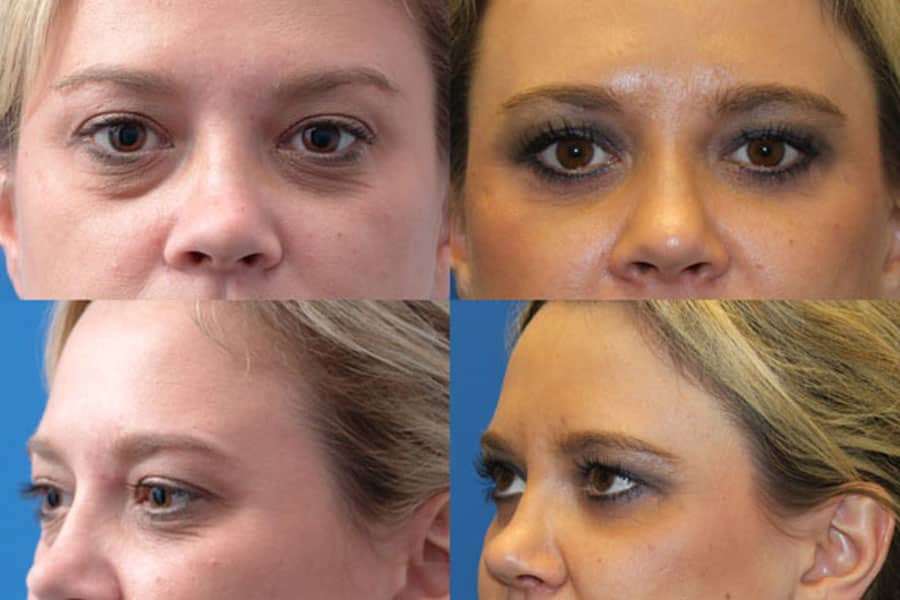
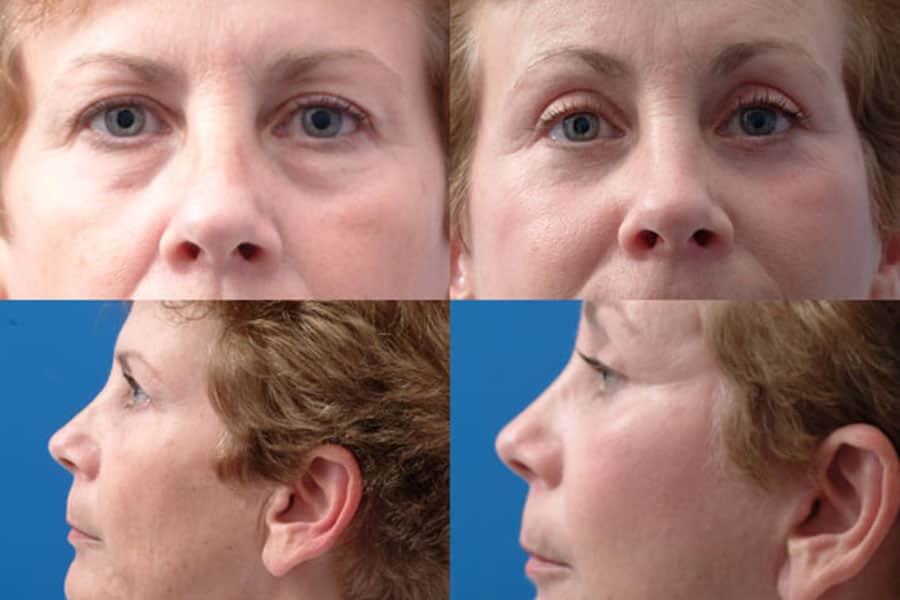
Patients who have high hairlines, or significantly receding hairlines, may benefit from an open brow lift procedure. In this situation an incision is made along the hairline to allow access to the brow. Excess skin is removed and the muscles that cause frown lines are weakened. This results in brow elevation, elimination of wrinkles and can actually lower the hairline to a more normal position.
Nasal Surgery
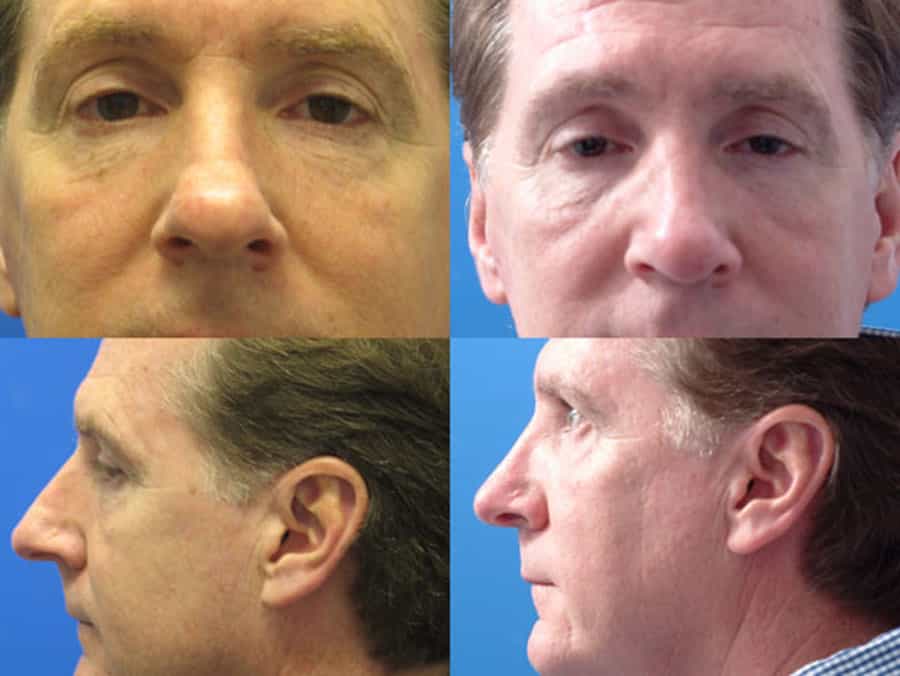
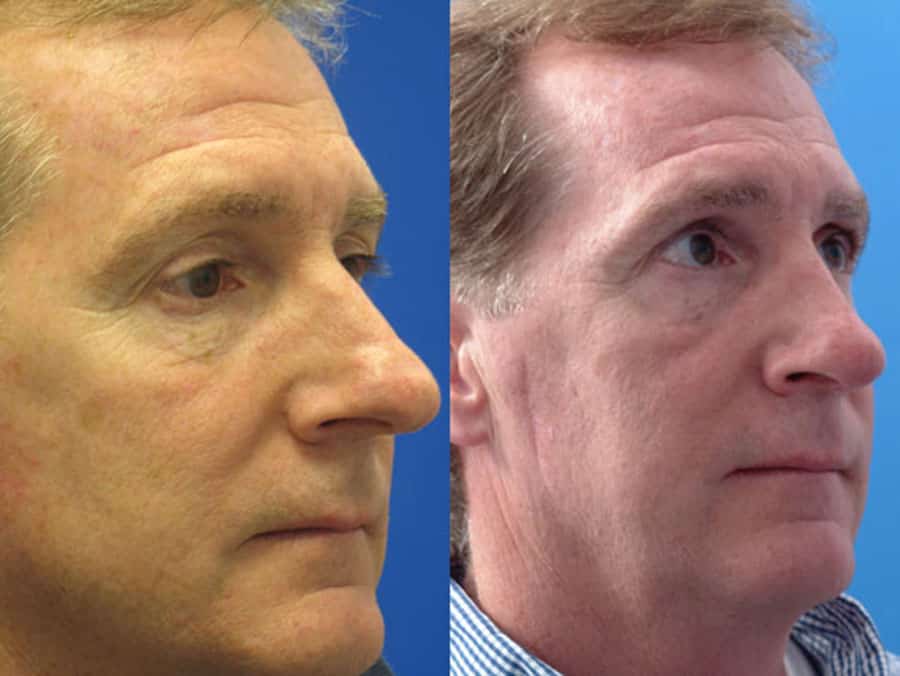
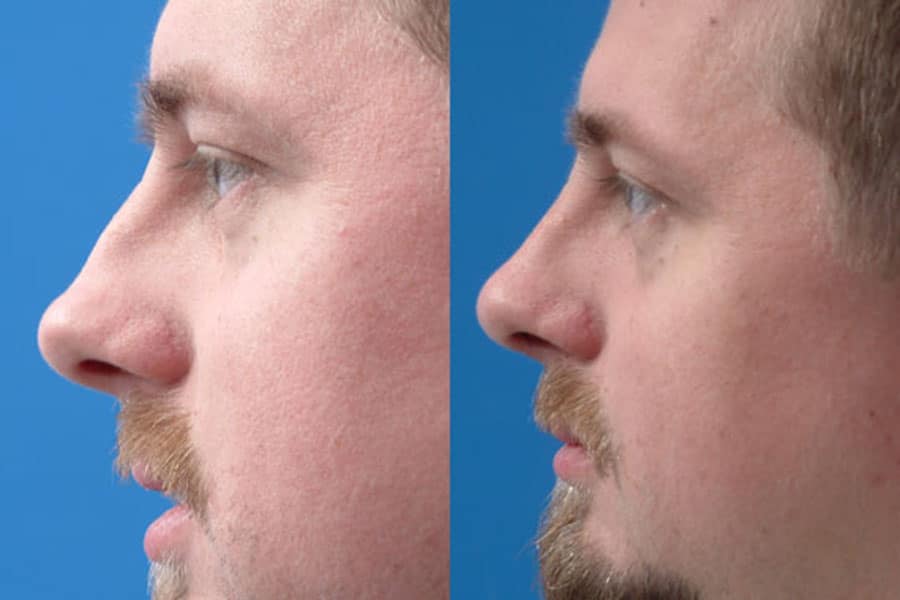
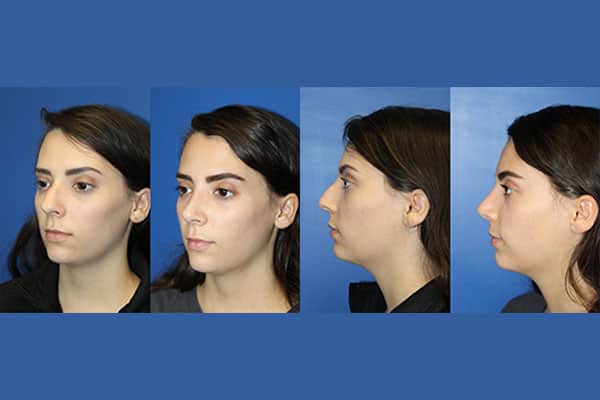
The appearance of the nose is strongly affected by the surrounding facial structures. Some individuals who have an under projecting or “weak” chin benefit from a chin implant. This puts the nose in better proportion with the rest of the face and will make the nose look smaller.
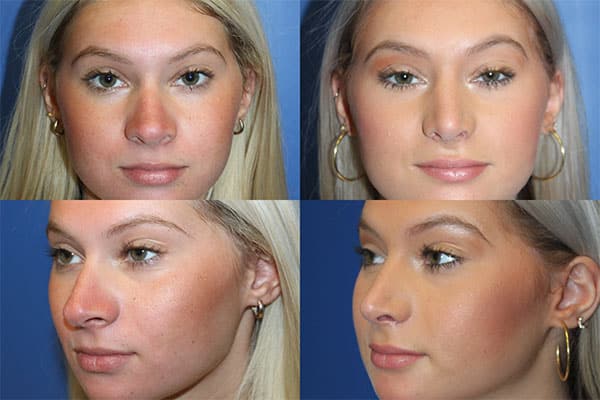
Rhinoplasty (nasal surgery) can be performed in the office surgery center, usually under general anesthesia. Surgeries involving significant alterations in the tip of the nose are usually done in an “open” fashion. Technically this means a small incision is made at the base of the thin divider between the nostrils. This allows the surgeon to see the structures he or she is working on directly, giving much greater precision and control. The surgery usually takes about two hours and recovery is ten days to two weeks depending on how extensive the surgery is. A splint is generally worn on the outside of the nose for one to two weeks and internal splints are used if work is done to improve breathing (septoplasty). The swelling typically lasts about a week and the bruising lasts two to three weeks.
Surgery done to correct the effects of trauma (a crooked nose, a deviated septum causing breathing problems) may be covered by your insurance. Typically, you will need documentation of the injury such as x-rays and notes from the emergency room or your physician documenting the injury. Operations performed to change the appearance of your nose are considered cosmetic and will not be covered by your insurance. If you desire cosmetic changes for your nose, but also have breathing problems related to a deviated septum, your insurance may cover the cost of the septoplasty.
Ear Surgery
Torn earlobes are another common problem that can be easily corrected. This situation usually results from the use of heavy earrings or accidental trauma. The earlobes will not heal together without surgery. This repair can be done in the office under local anesthesia.
Chin Augmentation
LIPOSUCTION OF CHIN / NECK


